
OEM vs ODM vs Contract Manufacturing: What Each Model Really Means
Brand owners often use OEM, ODM and contract manufacturing as if they describe the same relationship. They do not. This OEM vs ODM vs contract manufacturing guide starts with one question: who brings the formula, and who owns it after the first order? The model you choose changes who owns the formula, how much development work is required, how quickly you can launch and how much control you keep after the first order. For a brand buying cosmetic contract manufacturing or building a private label line, the right model depends on your stage, not on which label sounds more premium.
A buyer once told us, “I don’t really know what I’m buying.” She had a sample and a catalogue, but the project still had no decision on formula ownership. That is where the OEM, ODM or contract manufacturing conversation should start.
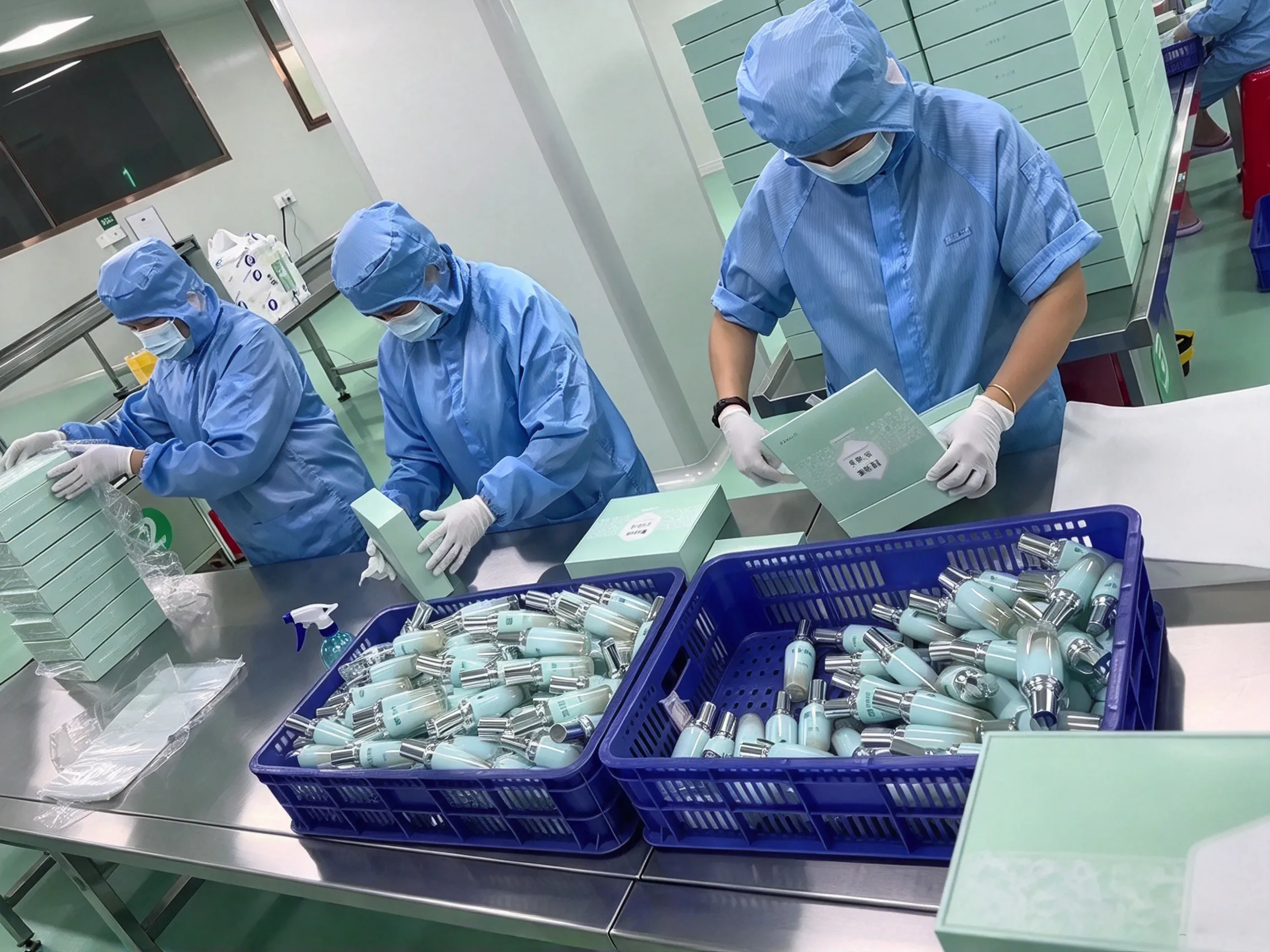
OEM: You Bring the Product Direction
In an OEM relationship, the brand defines the product direction or brings a formula brief, and the factory develops or manufactures it to that brief. The brand usually owns the formula position, packaging direction and market strategy. OEM is suitable when you have a clear product idea, a specific point of difference or an existing formula you want to reproduce at scale.
This route usually needs a written brief, a reference sample and a clear position on formula ownership. If you want an exclusive formula, ask for that in writing before sampling starts.
Where OEM fits best
- Brands with a defined product concept or formula brief.
- Owners who want more control over formula and positioning.
- Projects prepared to invest time in sampling and stability testing.
ODM: The Factory Brings a Proven Starting Point
In an ODM relationship, the manufacturer offers a developed formula or product platform that can be adapted to your brand. This reduces development time and risk because the factory is starting from an existing formula, but it also means the starting point is shared with the manufacturer’s other customers unless you commission meaningful changes.
The speed advantage is real, but shared starting points need a clear exclusivity position. “Can I change the fragrance or pH?” and “How many other brands can use this base?” are two questions that should be answered before the deposit.
Where ODM fits best
- First-time brand owners who need to launch quickly.
- Brands entering a category without a fully developed formula.
- Projects that need lower initial development risk.
Contract Manufacturing: The Broadest Commercial Structure
Contract manufacturing describes a production agreement in which a factory manufactures according to an agreed specification. It can include OEM or ODM elements, depending on who develops the formula and who owns the intellectual property. This is why a buyer searching for personal care contract manufacturer or cosmetic contract manufacturing should ask what is included: formulation, regulatory documents, packaging, QC and logistics are not automatically identical in every contract.
A contract manufacturing quote is only useful when the handover points are named: who develops the formula, who approves the claims, who owns the technical file and who signs off the first bulk batch.
Where Brands Usually Get the Choice Wrong
- Choosing ODM only because it is faster, without checking whether the formula supports the claims you want.
- Choosing OEM without budgeting for sampling, stability testing and extra development time.
- Assuming the lowest quote includes the same documents, packaging support and compliance work.
- Treating contract manufacturing as a price category instead of defining the handover points.
Real project lesson: One buyer treated contract manufacturing as a price category and did not define who approved the label claims. The product later reached Dubai, where its Montaji registration was rejected. The factory had produced what the brief asked for, but the brief itself was incomplete. The brand returned, changed the claims and repeated part of the safety assessment. Almost four months were lost.
How to Choose by Brand Stage
| Your stage | Usually a practical starting point | Why |
|---|---|---|
| First product, limited budget | ODM or a standard formula with limited adaptation | Faster path to a first batch and lower development risk. |
| Clear product idea, differentiated claims | OEM or custom formulation | More control over formula, positioning and ownership. |
| Existing range with several SKUs | Contract manufacturing with defined specifications | More structured production planning and document control. |
| Expanding from one market to another | Model chosen by compliance requirement | Halal, BPOM, NPRA and labeling requirements may change the factory scope. |
Cost, MOQ and Ownership
What You Actually Own
The cheapest model is not always the lowest-risk model. ODM may reduce development time but can limit differentiation. OEM may offer more control but require a higher initial investment. Contract manufacturing depends on the agreed specification and the division of responsibility.
Before you compare two quotes, make both suppliers answer the same six questions:
- Is the formula exclusive to my brand, my market or neither?
- What happens to the formula if I move to another factory?
- Does the price include development, samples, stability testing and artwork review?
- What MOQ applies to the formula, the packaging and the finished product?
- Who owns the technical file and certificate package?
- What must be approved in writing before the first bulk run?
Compliance and Documentation
Whichever model you choose, the factory should be able to provide GMP and quality documents, formula and ingredient information, batch records, COA and stability documentation where applicable. For Malaysia and Southeast Asia, the local notifier or importer handles market registration, while the factory supports the technical file. See our certifications page and Compare OEM vs ODM services and contract manufacturing support for the process.
For a reference point on cosmetic GMP documentation, see the ISO 22716 standard page. For an example of how a major market frames cosmetic product rules, see the European Commission cosmetics page.
Malaysia and Southeast Asia Context
For Malaysia-specific requirements, NPRA document preparation and Halal positioning, start with our Malaysia Cosmetic & Personal Care OEM Hub. For the buyer-side selection checklist, read How to Choose a Cosmetic OEM Manufacturer in Malaysia. The model choice can change the document path: a standard ODM base may already have a technical dossier, while a custom OEM formula usually needs more work before NPRA notification.
How Kangbai Nian Supports All Three Models
We can work from your brief, adapt an existing formula or define a production specification for an established range. Our team supports feminine care, skincare and selected personal care formats, with sampling, packaging, QC and export documentation handled through one project flow.
Before quoting, we ask which parts you want to own and which parts you want us to bring. That single answer often decides whether the project should start as OEM, ODM or contract manufacturing.
Next Step: Define the Model Before Comparing Prices
Send us your target product, market, formula ownership expectation and first-order volume. We will tell you whether OEM, ODM or a contract manufacturing structure fits the project and what the first sample step should be. Request a quote or message us on WhatsApp.
Related Products
Related next steps: Review private label feminine care manufacturing.