Understanding the minimum order quantity private label feminine care is the first step for any new brand entering the Southeast Asian market. You have your product ideas, your brand name, and a vision for what you want to create. But there‘s one question that often stops new brand owners in their tracks: “What is the minimum order quantity (MOQ)?”
If you’re a startup or small brand in Southeast Asia, MOQ is one of the most critical factors in your manufacturing decision. It determines your upfront investment, your cash flow, and even your ability to test the market. In this guide, we’ll break down everything you need to know about MOQ for private label feminine care products — and how you can work with it to your advantage.

What is the Minimum Order Quantity for Private Label Feminine Care Products?
MOQ stands for Minimum Order Quantity. It is the smallest number of units a manufacturer is willing to produce for a single order.
For many new brand owners, MOQ can feel like a barrier. But it’s important to understand why manufacturers set these limits in the first place.
Manufacturers set MOQs for several practical reasons:
Raw Material Procurement
To produce any product, manufacturers need to purchase raw materials — packaging, ingredients, bottles, labels, and more. These materials are typically ordered in bulk from suppliers. A minimum order ensures that the manufacturer can cover the cost of materials without incurring losses.
Production Setup Costs
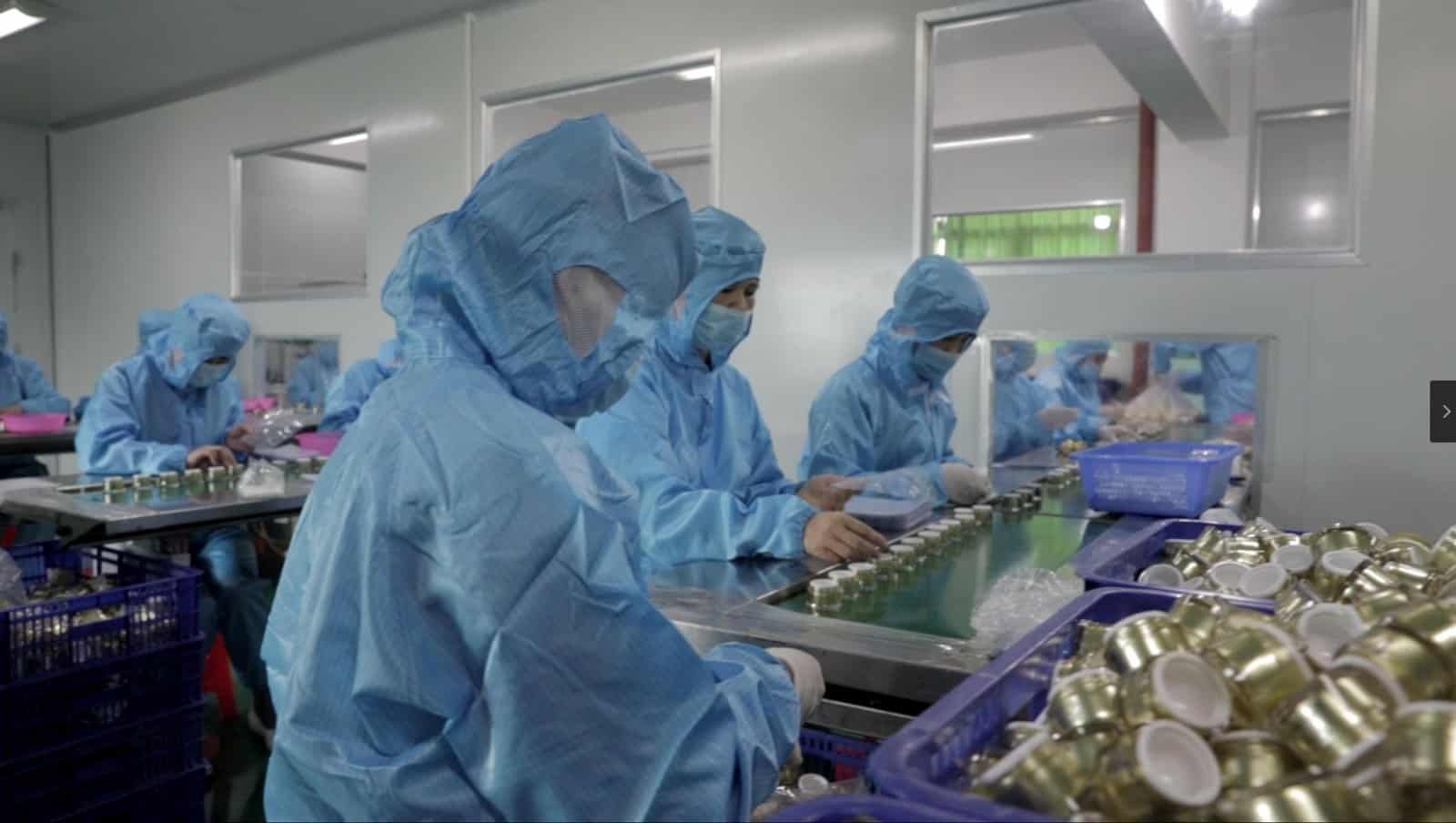
Every production run requires setup time. Machines need to be calibrated, molds need to be prepared, and production lines need to be configured. These setup costs are relatively fixed regardless of order size, so manufacturers need a minimum quantity to make each production run economically viable.
Supply Chain Efficiency
Manufacturing is a complex process involving multiple steps: formulation, filling, packaging, quality control, and shipping. A minimum order ensures that all these steps can be executed efficiently without wasting resources.
Pricing Stability
By setting MOQs, manufacturers can offer more stable and competitive pricing. When production runs are larger, the cost per unit decreases, which benefits both the manufacturer and the brand owner in the long run.
Understanding these reasons helps new brand owners see MOQ not as an obstacle, but as a standard business practice that ensures quality and consistency.
Typical MOQ Ranges for Feminine Care Products in Southeast Asia
MOQ requirements vary depending on the product type, complexity, and manufacturer. Here’s a general overview of typical MOQ ranges in the Southeast Asian market:
Intimate Washes and Foams
Typical MOQ: 5,000 – 10,000 units
These products are relatively straightforward to produce, making them more accessible for new brands.
Gels and Serums
Typical MOQ: 10,000 – 20,000 units
Gels and serums often require more precise formulation and filling processes, which can increase the MOQ.
Creams and Lotions
Typical MOQ: 10,000 – 20,000 units
Similar to gels, creams and lotions involve more complex manufacturing steps.
Suppositories and Pellets
Typical MOQ: 50,000 – 100,000 units
These products require specialized production equipment and more stringent quality control, resulting in higher MOQs.
Custom Formulations
Typical MOQ: 10,000 – 20,000 units
Custom formulations require additional R&D time and resources, which can affect the minimum order.
It’s worth noting that these ranges are industry averages. Some manufacturers offer lower MOQs, while others require higher volumes. The key is finding a partner whose MOQ aligns with your business stage and budget.
Kangbai Nian’s Flexible MOQ Advantage
Kangbai Nian understands that the minimum order quantity for private label feminine care products can be a major concern for new brands. Unlike large corporations with massive budgets, startups need the flexibility to start small, test the market, and scale gradually.
That’s why Kangbai Nian offers competitive MOQs tailored to the needs of growing brands:
Feminine Care Washes and Foams: MOQ as low as 5,000 units
Gels and Serums: MOQ starting from 10,000 units
Custom Formulations: MOQ starting from 10,000 units
Suppositories and Pellets: MOQ from 100,000 units (negotiable based on requirements)
These flexible MOQs allow you to:
- Test your product in the market without risking large upfront investment
- Validate customer demand before scaling up production
- Refine your formulation and packaging based on real feedback
- Manage cash flow more effectively during your early stages
For new brands in Malaysia, Thailand, Vietnam, and Indonesia, this flexibility can be the difference between launching successfully and being stuck before you even start.
How to Negotiate MOQ with Your OEM Partner
While MOQs are standard practice, there are several strategies you can use to work within them — or even negotiate them down.
1. Start with a Smaller Product Range
Instead of launching with a full product line, start with 1-2 core products. This allows you to meet MOQ requirements more easily while testing the market.
2. Combine Products in One Order
Some manufacturers allow you to combine different products (e.g., wash + gel + cream) into a single order to meet the MOQ. This can be a great way to launch a small product range without exceeding your budget.
3. Order Sample Batches First
Many OEM partners offer sample batches (usually 50-200 units) for testing and validation before committing to a full production run. This allows you to confirm the formula, packaging, and quality before placing a larger order.
4. Plan for Phased Production
If your budget is limited, consider phased production. Start with a smaller first order, test the market, and then place subsequent orders as demand grows. This approach helps you manage cash flow while building your brand.
5. Be Transparent About Your Business Stage
Don’t be afraid to communicate openly with your OEM partner. Many manufacturers are willing to work with new brands by offering flexible terms — especially if they see long-term potential in the partnership.
Frequently Asked Questions About MOQ
Q: Can I order samples before placing a full MOQ order?
A: Yes. Most OEM manufacturers offer sample batches (typically 50-200 units) for testing and validation. This allows you to confirm product quality before committing to a larger order.
Q: Can I combine different products to meet the MOQ?
A: Some manufacturers allow product combinations. For example, ordering washes and gels together may count toward the combined total MOQ. This is a common arrangement for brands launching with a small product range. Always confirm this with your manufacturer before placing an order.
Q: What happens if my product doesn’t sell well after the first batch?
A: Starting with a lower MOQ helps minimize this risk. If the product needs adjustments, you can refine the formula, packaging, or marketing approach before placing a second order.
Q: Does MOQ apply to packaging and labeling as well?
A: Yes. Packaging materials also have minimum order requirements from suppliers. This is something to consider when budgeting for your first production run.
Q: Can MOQ be negotiated over time?
A: Yes. As your order volumes increase, you may gain more flexibility to negotiate terms. Many manufacturers offer better pricing and terms to repeat customers with consistent order history.
Conclusion: Start Small, Scale with Confidence
MOQ doesn’t have to be a barrier to launching your brand. When you understand how it works and partner with a manufacturer that offers flexible terms, it becomes a tool for growth rather than an obstacle.
Kangbai Nian has been helping new brands in Southeast Asia bring their feminine care products to market for over 21 years. With flexible MOQs, custom formulation support, and end-to-end OEM/ODM services, we make it easier for you to start small and scale with confidence.
If you’re ready to take the next step, we’re here to help. Contact us to discuss your specific MOQ requirements and get a personalized quote for your brand.
Related resources: Halal OEM Service · OEM FAQ

Next Steps
Review private label feminine care manufacturing, OEM/ODM services.